Teva v. Lilly -- Clarifies Written Description of Method Claims Involving A Genus
April 27, 2026, 3:48 PM
The Federal Circuit recently clarified its written description jurisprudence concerning claims directed to methods of using a genus. Teva Pharms. Int'l GmbH v. Eli Lilly & Co., No. 24-1094, 2026 WL 1025802 (Fed. Cir. Apr. 16, 2026). The Federal Circuit contrasted the analysis applied to: (i) claims directed to using a genus for the function that characterizes that genus; and (ii) claims directed to using a genus for a function different from the genus itself. The Federal Circuit determined that the disputed patents adequately disclosed claims in this second category.
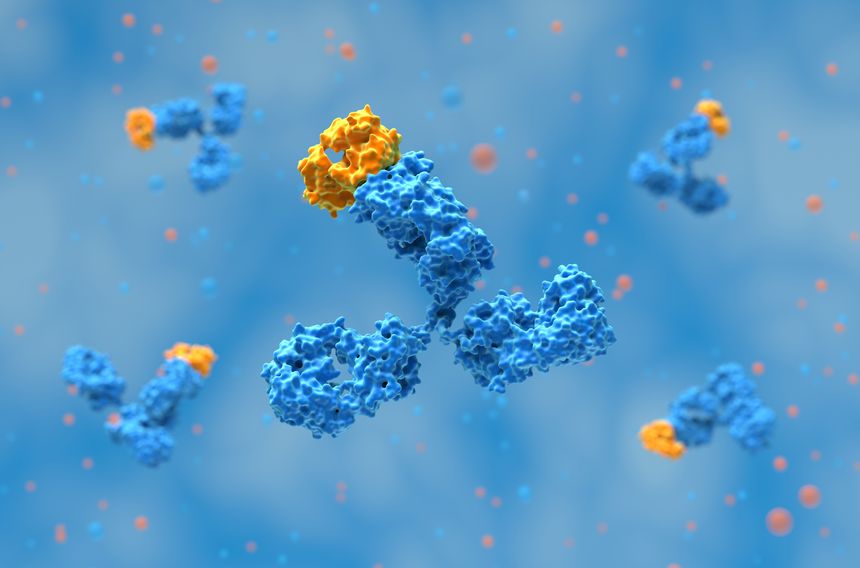
Teva alleged that Eli Lilly’s Emgality product infringed Teva’s patents directed to using humanized anti-CGRP antibodies to treat headaches. See U.S. Pat. Nos. 8,586,045; 9,884,907; 9,884,908. A representative claim is “a method for reducing incidence of or treating headache in a human, comprising administering to the human an effective amount of an anti-CGRP antagonist antibody, wherein said anti-CGRP antagonist antibody is a ... humanized monoclonal antibody.” '045 patent at claims 17, 30. Following trial (and Lilly’s unsuccessful IPR challenges), a jury found that Lilly willfully infringed Teva’s patents and that the patents were not invalid under § 112. The district court (D. Mass), however, granted Lilly’s post-trial motion for judgment as a matter of law that the patents were invalid for inadequate written description and lack of enablement. Lilly appealed.
The core question on appeal was whether the patent specification sufficiently disclosed the genus of antibodies for carrying out the claimed method. The patent specification disclosed one humanized anti-CGRP antagonist antibody. Nevertheless, when successfully arguing to the PTAB that claims directed to the antibodies themselves were obvious, Lilly asserted that the antibodies themselves were “well known” and that techniques for making them were “extensively described in the prior art.” Teva v. Lilly, 2026 WL 1025802 at *6. Lilly also did not dispute that “a reasonable jury could have found that a skilled artisan would have understood from the specification that all humanized anti-CGRP antagonist antibodies treat headache.” Id. Based on this evidence, the Federal Circuit determined that a reasonable juror could have found the claimed methods of treatment using the “well known” genus of antibodies complied with the written description and enablement requirements. Id. at *8,10.
The Federal Circuit distinguished its precedent concerning a genus that is functionally defined by the claimed use (i.e., “methods of doing X using something that does X”). See, e.g., Univ. of Rochester v. G.D. Searle & Co., 358 F.3d 916, 918, 926-27 (Fed. Cir. 2004) (invalidating claims directed to “methods of selectively inhibiting PGHS-2’s activity by administering a compound that selectively inhibits PGHS-2’s activity.”) It analogized the disputed claims in Teva v. Lilly to a different vein of precedent: where a well-known genus is used to treat something different, written description is met (at least as to the genus element). See, e.g., In re Herschler, 591 F.2d 693, 695, 701-02 (CCPA 1979) (finding a claim directed to “a method of enhancing skin penetration of a physiologically active steroidal agent by applying it together with DMSO” valid under § 112 because the genus was sufficiently known in the art, such that a POSA would recognize that any member of the genus would work in the claimed method). Because the genus itself was known in the prior art, the Federal Circuit determined that a POSA would have understood from the specification that all humanized anti-CGRP antagonist antibodies can treat headaches.
How far, if at all, this case might shift the Section 112 pendulum in favor of patentability in this field remains to be seen. The facts presented here, including Lilly’s specific admissions about the well-known nature of the claimed antibodies, are likely unique. For example, a patent may face greater scrutiny when less than “all” the members of a known genus of antibodies are useful in carrying out a claimed method.
To subscribe to our publications, click here.
News & Insights
News & Insights
Concurrences New Frontiers of Antitrust Conference 2026
Sponsorship
Antitrust
Stakeholders 26th Annual CYOC Conference
Event
Antitrust
ALFDP 20th Anniversary Annual Conference
Event
Antitrust
GCR Live: Women in Antitrust 2026
Sponsorship
Antitrust
GICLI Annual Meeting 2026
Sponsorship
Antitrust
Informa CompLaw Advanced EU Conference 2026
Sponsorship
Antitrust
Wild Tomorrow 2026 Annual Gala
Sponsorship
Antitrust
NAPABA Annual Convention 2026
Sponsorship
Antitrust
Law.com General Counsel Conference East 2026
Sponsorship
Antitrust
Economist Enterprise's 1st Annual Antitrust Summit US
Sponsorship
Antitrust
